Critical Mistakes to Avoid in Your Generative AI Deployment Blueprint
Manufacturing leaders are racing to integrate generative AI into their operations, yet many initiatives stumble before delivering measurable value. The difference between successful implementations and costly failures often comes down to execution strategy rather than technology itself. Understanding the common pitfalls that derail generative AI projects in manufacturing environments can save organizations millions in wasted investment and protect them from strategic setbacks that compromise competitive position.
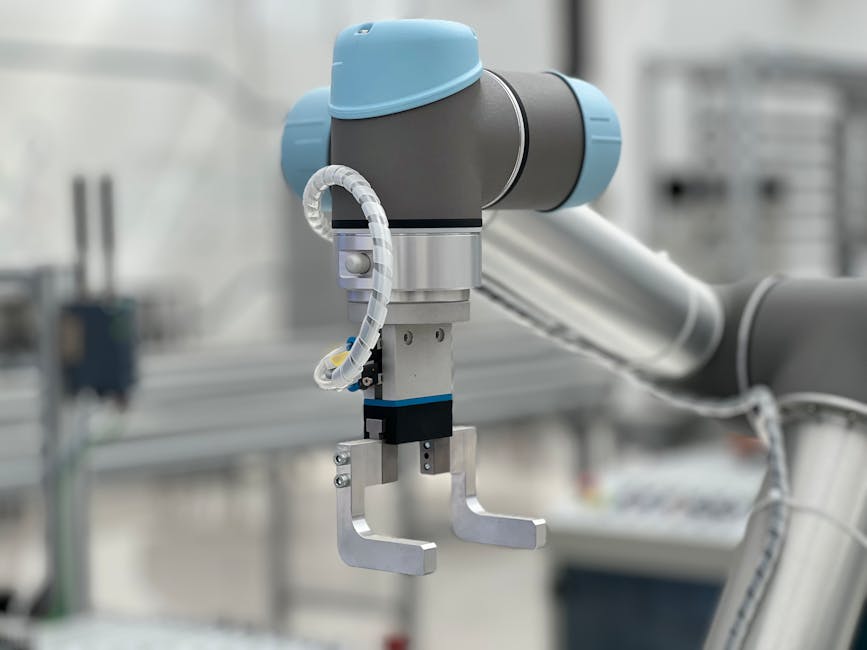
The urgency to deploy AI-powered solutions across production floors, supply chains, and quality systems has never been greater, but rushing without a structured approach leads to predictable failures. A comprehensive Generative AI Deployment Blueprint provides the framework necessary to navigate the complexity of modern manufacturing while avoiding the mistakes that plague poorly planned initiatives. Manufacturing execution systems, predictive maintenance protocols, and supply chain networks require careful integration planning that many organizations overlook in their enthusiasm to adopt cutting-edge technology.
Mistake One: Deploying Without Clear Use Case Definition
The most fundamental error in generative AI deployment occurs when manufacturers attempt to implement technology before identifying specific, measurable use cases. Organizations often fall into the trap of adopting AI because competitors are doing so, rather than because they have identified concrete problems that generative AI can solve better than existing approaches. This mistake manifests in several ways across manufacturing operations.
In production environments, teams might deploy generative AI for process optimization without first establishing baseline OEE metrics or identifying which specific bottlenecks the technology should address. Without clear performance targets tied to MTBF improvements, scrap reduction percentages, or cycle time decreases, there is no objective way to measure whether the generative AI deployment delivers value. Similarly, quality control applications often fail when organizations cannot articulate precisely which defect categories the AI should detect or what false positive rates are acceptable in their specific production context.
The solution requires disciplined upfront analysis before any Generative AI Deployment Blueprint moves to implementation. Manufacturing teams should conduct thorough process mapping to identify pain points where generative AI offers advantages over traditional automation or statistical methods. For CNC operations, this might mean documenting specific toolpath optimization scenarios where generative design could reduce machining time. For Supply Chain Optimization, it requires mapping demand variability patterns where generative forecasting models could outperform conventional approaches. Every use case should include quantified success metrics tied to business outcomes rather than technical capabilities.
Mistake Two: Underestimating Data Infrastructure Requirements
Manufacturers frequently discover too late that their existing data infrastructure cannot support the demands of generative AI applications. This mistake stems from fundamentally misunderstanding how generative AI differs from traditional analytics in its data requirements. While conventional business intelligence tools can function with periodic batch updates and structured databases, generative AI models require continuous data streams, extensive historical datasets, and often real-time access to production telemetry.
The gap becomes apparent when organizations attempt to deploy generative AI for predictive maintenance without having established robust IoT sensor networks across their equipment base. RFID systems tracking work-in-progress might provide location data but lack the granular machine performance metrics necessary to train generative models for anomaly detection. ERP systems contain transactional records but often miss the process parameters that generative AI needs to understand production dynamics. PLM databases store design information but rarely include the manufacturing execution data that would allow generative AI to optimize production sequencing.
Addressing this mistake requires honest assessment of data maturity before committing to a Generative AI Deployment Blueprint. Organizations should audit their current data landscape against the specific requirements of their prioritized use cases. This means verifying not just data availability but also quality, granularity, timeliness, and integration readiness. For manufacturers targeting AI solution development, establishing data governance frameworks before deployment prevents the common scenario where promising AI prototypes fail during scaling because production data proves insufficient or inconsistent with development datasets.
Mistake Three: Ignoring Integration With Existing Manufacturing Systems
A critical oversight occurs when teams treat generative AI as a standalone system rather than as a component that must integrate seamlessly with existing Manufacturing Execution Systems, SCADA platforms, and enterprise applications. This mistake often emerges from organizational silos where data science teams develop AI capabilities in isolation from the operational technology teams responsible for production systems.
The consequences become visible when generative AI recommendations cannot flow into actionable work orders because the AI platform lacks integration with the MES. Brilliant generative scheduling algorithms remain theoretical exercises if they cannot communicate with the ERP system that manages material requirements and capacity planning. Generative quality prediction models provide limited value when their outputs require manual transcription into quality management systems rather than automatic triggering of inspection protocols or process adjustments.
Manufacturing organizations following a robust Generative AI Deployment Blueprint invest in integration architecture from the project's inception. This means involving IT/OT integration specialists alongside data scientists during requirement definition. For Rockwell Automation or Siemens environments, it requires understanding existing automation protocols and ensuring generative AI platforms can communicate through standard industrial interfaces. The solution includes creating middleware layers that translate between AI model outputs and the command structures that production systems understand, building API connections that allow bidirectional data flow, and establishing governance protocols for how AI-generated recommendations escalate through approval workflows before affecting production.
Mistake Four: Neglecting Change Management and Skills Development
Technical excellence in AI implementation means nothing if the manufacturing workforce cannot effectively use the new capabilities. Organizations repeatedly underestimate the change management required to shift from traditional decision-making processes to AI-augmented operations. This mistake appears across multiple manufacturing functions, from production supervisors who distrust generative maintenance recommendations to supply chain planners who continue using familiar spreadsheet models despite having access to sophisticated generative forecasting tools.
The skills gap compounds the challenge. Production engineers accustomed to deterministic automation struggle to work with probabilistic AI outputs that express confidence levels rather than certainties. Quality managers trained in 6 Sigma methodologies need new frameworks for understanding how generative AI approaches root cause analysis differently than traditional APQP processes. Maintenance technicians require training not just on interpreting AI recommendations but on providing the feedback that allows continuous model improvement.
Successful Generative AI Deployment Blueprints allocate substantial resources to workforce preparation. This includes developing role-specific training that explains AI capabilities in the context of familiar manufacturing problems rather than abstract technical concepts. For production teams, this means demonstrations showing how generative process optimization relates to improving first-pass yield rather than lectures on neural network architecture. Organizations should identify AI champions within existing teams who can bridge between technical specialists and operational staff. These champions play crucial roles in building trust, gathering user feedback, and ensuring that AI tools align with actual workflow requirements rather than theoretical ideal states.
Mistake Five: Failing to Plan for Model Maintenance and Evolution
The final critical mistake involves treating generative AI deployment as a one-time project rather than an ongoing operational capability requiring continuous attention. Manufacturing environments change constantly through equipment upgrades, product mix shifts, supplier changes, and process improvements. Generative AI models trained on historical data gradually lose accuracy as these changes accumulate, yet many organizations lack plans for systematic model monitoring and retraining.
This oversight becomes expensive when degraded model performance goes undetected until it causes production issues. A generative scheduling model might continue optimizing based on outdated equipment capabilities after a line upgrade, leading to suboptimal plans. Generative quality prediction might miss emerging defect patterns because retraining cycles happen quarterly while the production environment evolves weekly. Without proper monitoring, organizations lose the competitive advantage that justified the AI investment in the first place.
Addressing this requires embedding model lifecycle management into the Generative AI Deployment Blueprint from the beginning. Manufacturing organizations should establish performance monitoring dashboards that track model accuracy metrics alongside traditional production KPIs. This includes setting trigger thresholds that automatically flag when model performance degrades below acceptable levels. Organizations need processes for systematic data collection that supports periodic retraining, including capturing edge cases and anomalies that models handle poorly. For manufacturers using Manufacturing Execution Systems, this means creating feedback loops where actual production outcomes systematically update the training datasets that keep generative models aligned with current reality.
Building Resilience Into Your Deployment Strategy
Avoiding these mistakes requires more than awareness; it demands systematic planning that addresses each potential failure mode before deployment begins. Manufacturing leaders should view their Generative AI Deployment Blueprint as a living framework that evolves with experience rather than a static plan executed once. This means building in checkpoints where teams assess whether assumptions about use cases, data readiness, integration requirements, workforce capabilities, and ongoing maintenance hold true in practice.
Organizations that successfully navigate generative AI deployment treat early implementations as learning opportunities that inform subsequent scaling. Starting with narrowly scoped pilots in controlled environments allows teams to encounter integration challenges, data quality issues, and user acceptance problems while stakes remain manageable. These pilots should deliberately stress-test the deployment approach to expose weaknesses before committing to enterprise-wide rollouts. The lessons learned inform refinements to the overall deployment blueprint, creating organizational capabilities that extend beyond any single AI application.
Conclusion
The path to successful generative AI integration in modern manufacturing is littered with cautionary examples of organizations that overlooked fundamental execution principles in their rush to deploy advanced technology. By recognizing these common mistakes and building mitigation strategies into deployment planning, manufacturers can dramatically improve their success rates and accelerate their journey toward AI-augmented operations. The difference between transformative results and expensive failures often comes down to disciplined execution of a comprehensive Generative AI Deployment Blueprint that addresses not just technology selection but the full spectrum of organizational readiness factors. As manufacturing continues evolving toward increasingly intelligent operations, technologies like Predictive Maintenance AI demonstrate the value of properly executed AI strategies that avoid these common pitfalls and deliver measurable operational improvements.


Comments
Post a Comment