Critical Mistakes in Generative AI Deployment for Smart Manufacturing
The manufacturing sector stands at a pivotal juncture where Generative AI Deployment promises to revolutionize everything from process automation to supply chain resilience. Yet despite the technology's transformative potential, many organizations stumble during implementation, wasting millions of dollars and eroding stakeholder confidence. Understanding the most common pitfalls—and how to avoid them—can mean the difference between competitive advantage and costly failure in today's intelligent manufacturing landscape.
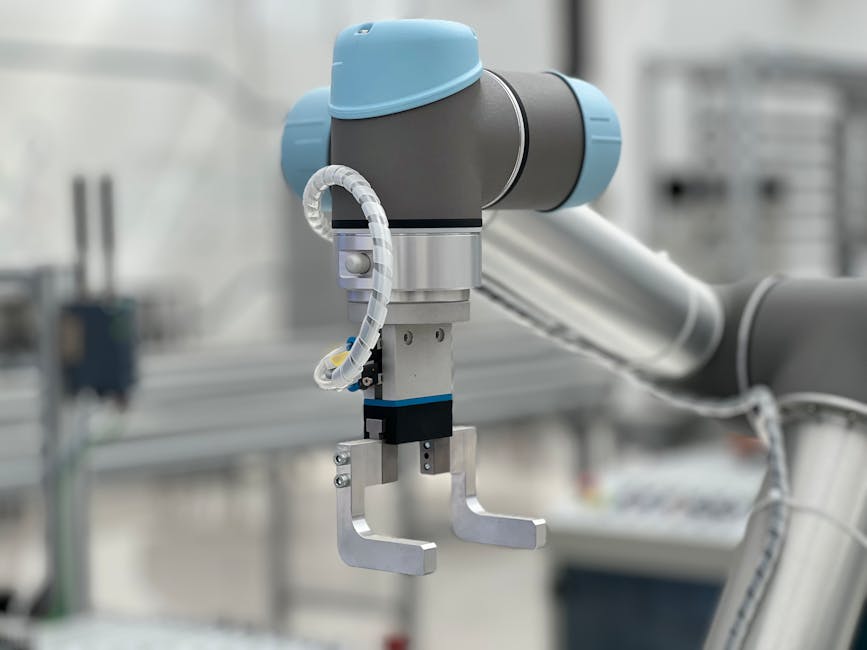
Manufacturing leaders across the industry have learned hard lessons about implementing AI systems at scale. The journey toward successful Generative AI Deployment requires navigating technical complexities, organizational change management, and operational integration challenges that can derail even well-funded initiatives. Companies like Siemens and GE Digital have documented their experiences, revealing patterns of mistakes that plague first-time deployments across the sector.
Mistake #1: Neglecting Data Infrastructure Before Generative AI Deployment
The most fundamental error manufacturers make is attempting Generative AI Deployment without establishing robust data foundations. Many facilities operate with legacy MES systems that produce siloed, inconsistent data streams—creating a fragmented information landscape that undermines AI model performance. One automotive parts manufacturer invested $4.2 million in a generative design system for component optimization, only to discover their CNC machines used incompatible data formats across three production facilities. The project stalled for eighteen months while they standardized data architectures.
Quality data infrastructure means more than basic collection. It requires implementing proper RFID tracking for materials movement, integrating IoT sensors across production lines with standardized protocols, and establishing data governance frameworks that ensure consistency. Without these foundations, generative models produce unreliable outputs that operators quickly learn to distrust. The solution involves conducting thorough data audits before any AI initiative, mapping all existing data sources, identifying gaps in coverage or quality, and investing in integration platforms that can normalize disparate feeds into coherent streams suitable for model training.
Building the Right Data Foundation
Successful manufacturers approach this systematically. They establish centralized data lakes that aggregate information from ERP systems, quality control stations, equipment sensors, and SCM platforms. They implement master data management practices that maintain consistency across facilities. They create real-time data pipelines with proper versioning and lineage tracking. This groundwork typically requires six to twelve months but pays dividends throughout the AI lifecycle, enabling not just initial deployment but continuous model improvement and expansion to new use cases.
Mistake #2: Treating Generative AI as a Plug-and-Play Solution
Another critical misstep involves viewing Generative AI Deployment as a turnkey technology that can simply be installed like conventional software. Manufacturing environments present unique complexities that demand extensive customization. A precision machinery manufacturer partnered with a prominent AI vendor, expecting their pre-trained models to immediately optimize production scheduling. Instead, they discovered the models had no understanding of their specific constraints—changeover times for specialized tooling, material-specific curing requirements, or the nuanced skill sets of their workforce across different shifts.
The reality is that generative models require significant domain-specific training to deliver value in manufacturing contexts. This means investing in custom AI development that incorporates your process knowledge, operational constraints, and business rules. It means working with data scientists who understand both machine learning architectures and manufacturing operations—a rare combination that requires either extensive training of internal staff or careful selection of specialized partners. Generic models might demonstrate impressive capabilities in controlled environments, yet fail when confronted with the messy realities of shop floor operations, supply chain disruptions, or quality variations in raw materials.
The Customization Imperative
Organizations that succeed take an iterative approach. They start with narrowly defined use cases—perhaps generative models for optimizing maintenance schedules on a single production line—and gradually expand scope as they develop internal expertise. They involve operators, process engineers, and quality managers from the beginning, ensuring models incorporate tacit knowledge that exists in human experience but not in historical data. They build feedback loops where model outputs are continuously validated against actual outcomes, creating training datasets that reflect real-world performance rather than theoretical ideals. This approach requires patience and sustained investment, but it builds systems that actually work in practice, not just in pilot demonstrations.
Mistake #3: Underestimating Change Management in Manufacturing Analytics
Technical excellence alone cannot guarantee successful Generative AI Deployment. Many initiatives fail because organizations neglect the human dimension—the reality that AI systems fundamentally change how people work, make decisions, and perceive their roles. A consumer electronics manufacturer deployed generative models for Supply Chain Optimization that could dynamically adjust inventory levels and supplier allocations. The system performed brilliantly in testing, reducing carrying costs by 23% and improving fill rates by 17%. Yet within three months, procurement managers had developed workarounds to override its recommendations, effectively neutralizing its impact.
The problem was cultural rather than technical. Procurement staff felt the AI undermined their expertise and threatened their job security. They hadn't been involved in design decisions, didn't understand how the models worked, and received no training on interpreting outputs or handling edge cases. Management positioned the system as replacing human judgment rather than augmenting it—creating adversarial relationships instead of collaborative partnerships. This pattern repeats across manufacturing functions. Quality engineers resist AI-driven root cause analysis tools. Production planners ignore optimized schedules. Maintenance teams distrust algorithm-generated work orders.
Building Human-AI Collaboration
Successful deployments recognize that humans and AI systems each bring complementary strengths. They invest heavily in training programs that help staff understand AI capabilities and limitations. They design interfaces that explain model reasoning in accessible terms, not just presenting black-box recommendations. They establish clear decision rights—defining which choices AI makes autonomously, which require human approval, and which remain entirely in human control. They celebrate early wins publicly, showing how AI helps workers solve problems rather than replacing their judgment. They create career development paths that position AI skills as advancement opportunities rather than threats. This cultural foundation proves as important as technical infrastructure for long-term success.
Mistake #4: Ignoring Integration with Existing Manufacturing Systems
Generative AI models don't operate in isolation—they must integrate seamlessly with the complex ecosystem of manufacturing systems. Yet many organizations treat AI as a separate technology layer rather than a deeply integrated component of their operational infrastructure. A chemical manufacturer deployed generative models for process optimization that could recommend precise temperature, pressure, and catalyst adjustments to maximize yield. The models were scientifically sound and demonstrated 8% yield improvements in simulation. However, they existed as a standalone application that required operators to manually enter parameters into their distributed control systems—a cumbersome process that introduced errors and delays.
Real value emerges when generative AI connects directly to MES platforms, ERP systems, PLM tools, and equipment controllers. This requires robust API architectures, real-time data exchange protocols, and careful attention to system reliability and failover scenarios. It means considering how AI outputs trigger actions across multiple systems—how a generative maintenance recommendation might automatically create work orders in the ERP, allocate parts from inventory, schedule technician time, and update production plans to accommodate downtime. Without these integrations, AI remains an interesting experiment rather than an operational capability.
Architecting for Integration
Organizations should map their entire systems landscape before beginning Generative AI Deployment, identifying all touch points where AI will need to exchange data or trigger actions. They should establish integration standards early, preferring API-based architectures over point-to-point connections that become unmanageable as deployments scale. They should invest in middleware platforms that can orchestrate complex workflows across multiple systems. They should build monitoring capabilities that track data flows and detect integration failures before they impact operations. This architectural thinking requires involving IT infrastructure teams alongside AI specialists and operational leaders—ensuring technical feasibility matches business ambitions.
Mistake #5: Failing to Establish Clear ROI Metrics and Governance
The final common mistake involves launching Generative AI Deployment initiatives without defining success criteria or governance structures. Enthusiasm for AI's potential leads to unfocused efforts that pursue too many objectives simultaneously, making it impossible to measure impact or optimize performance. A diversified manufacturer launched seven parallel AI projects across different facilities and functions, from generative design for product development to predictive quality algorithms to supply chain simulations. Eighteen months and $12 million later, executives couldn't articulate which initiatives delivered value or why some succeeded while others stalled.
Effective AI governance requires establishing clear metrics tied to specific business outcomes. For OEE improvements, that might mean tracking unplanned downtime reduction or throughput increases. For quality applications, it could involve measuring defect rates, scrap costs, or customer returns. For supply chain use cases, relevant metrics might include inventory turns, supplier lead time variability, or on-time delivery performance. These metrics should be defined before deployment begins, with baseline measurements and realistic improvement targets that account for implementation timelines and learning curves.
Building Governance for Scale
Beyond metrics, organizations need governance structures that guide AI initiatives across their lifecycle. This includes steering committees that prioritize use cases based on business value and technical feasibility. It involves architectural review boards that ensure new deployments align with enterprise standards. It requires ethics and compliance oversight, particularly important in regulated manufacturing sectors where AI decisions about quality, safety, or environmental compliance carry legal implications. It means establishing clear ownership for model performance—who monitors accuracy, who investigates degradation, who approves retraining, and who decides when to retire underperforming models. Without this governance, AI initiatives proliferate chaotically, consuming resources without delivering sustained value.
Mistake #6: Overlooking Model Maintenance and Evolution
Many manufacturers view AI deployment as a one-time project rather than an ongoing operational responsibility. They invest heavily in initial development and deployment, then reduce support once systems go live. This neglect proves costly because manufacturing environments constantly evolve—new equipment, different materials, changing product mixes, varying quality standards. A generative model trained on historical data gradually becomes obsolete as conditions drift from its training foundation. MTBF predictions degrade as equipment ages differently than historical patterns. Process optimization recommendations become suboptimal as suppliers change material specifications. Quality predictions miss emerging defect patterns.
Sustained success requires treating AI models like production equipment that needs regular maintenance. This means monitoring model performance continuously, comparing predictions against actual outcomes to detect accuracy degradation. It involves establishing thresholds that trigger retraining when performance drops below acceptable levels. It requires maintaining training pipelines that can efficiently retrain models on updated data. It demands version control and testing processes that ensure new model versions improve on predecessors before deployment. Organizations that excel at this build AI operations (AIOps) capabilities modeled on their existing equipment maintenance practices—scheduled reviews, performance monitoring, preventive updates, and rapid response to failures.
Conclusion: Building Sustainable Generative AI Capabilities in Manufacturing
Avoiding these common mistakes requires a fundamentally different approach to Generative AI Deployment—one that recognizes AI as a strategic capability requiring sustained investment in infrastructure, skills, culture, and governance rather than a tactical technology project. Manufacturers must build data foundations before attempting advanced applications. They must customize solutions to their specific operational contexts rather than deploying generic models. They need to invest as heavily in change management and workforce development as in algorithms and computing infrastructure. They must architect for integration from the beginning, ensuring AI becomes embedded in operational systems rather than existing as isolated tools. And they must establish clear metrics and governance that guide initiatives toward business value.
The manufacturing sector has tremendous opportunities to leverage generative AI for competitive advantage—from optimizing complex production schedules to designing novel products to enhancing supply chain resilience. Yet realizing this potential demands learning from early mistakes and approaching deployment with appropriate rigor. Organizations should start with focused use cases where they can control variables and demonstrate value, then expand systematically as capabilities mature. They should balance ambition with realism, setting achievable targets that build confidence and momentum. As manufacturers navigate this transformative technology, solutions like Predictive Maintenance AI demonstrate how targeted applications can deliver measurable results while building the foundation for broader AI adoption across the enterprise. By avoiding common pitfalls and following proven practices, manufacturers can transform AI promise into operational reality.


Comments
Post a Comment