Automotive AI Integration: Cloud-Based vs Edge Computing Architectures
The architectural decisions that automotive manufacturers make today regarding where AI processing occurs will determine their competitive positioning for the next decade. As vehicles become increasingly dependent on machine learning algorithms for safety-critical functions, infotainment experiences, and predictive maintenance, the fundamental question of whether to implement cloud-based processing, edge computing within the vehicle, or hybrid approaches has profound implications for performance, cost, data privacy, and feature capabilities. This architectural choice touches every aspect of vehicle systems integration, from the specification of compute hardware and network connectivity requirements to the software development lifecycle and regulatory compliance strategies that manufacturers must adopt.
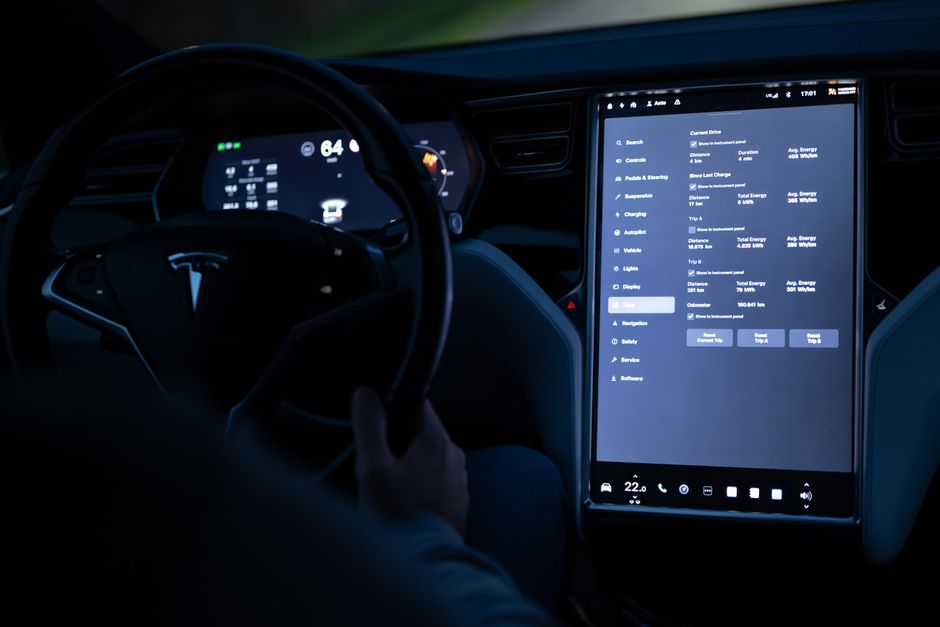
The debate between centralized cloud processing and distributed edge computing is not merely a technical consideration—it reflects different philosophical approaches to Automotive AI Integration that carry distinct advantages and limitations. Cloud-based architectures leverage the virtually unlimited computational resources and storage capacity of data centers to run sophisticated AI models that would be impractical to deploy on vehicle hardware. Edge computing approaches prioritize on-vehicle processing to minimize latency, ensure functionality during connectivity loss, and address data privacy concerns by keeping sensitive information local. Understanding the tradeoffs between these approaches is essential for embedded systems engineers, vehicle architects, and technology strategists making platform decisions that will influence product offerings through multiple vehicle generations.
Architecture Overview: Cloud-Based AI Processing
Cloud-based automotive AI architectures rely on continuous or intermittent connectivity to remote data centers where the heavy computational lifting occurs. In this model, vehicles collect sensor data, telemetry, and user interactions that are transmitted to cloud infrastructure for processing by large-scale machine learning models. The results—whether navigation recommendations, predictive maintenance alerts, or infotainment personalization—are then returned to the vehicle for presentation to the driver. This approach mirrors the architecture that has proven successful in consumer applications like voice assistants and recommendation engines, adapted for automotive use cases.
The primary advantage of cloud processing is the ability to deploy state-of-the-art AI models without the constraints of in-vehicle computing resources. Tesla's approach to autonomous driving development exemplifies this strategy, where the fleet continuously uploads driving data that feeds neural network training pipelines running on massive GPU clusters. The resulting model improvements are then distributed back to vehicles through over-the-air updates, creating a data flywheel effect where more vehicles generate more training data that produces better models that attract more customers. This architecture also simplifies the vehicle hardware specification, as compute-intensive workloads are offloaded to infrastructure that can scale elastically based on demand.
Cloud Architecture Limitations
However, cloud dependency introduces latency challenges that are unacceptable for safety-critical ADAS Technology applications. Round-trip communication times of 100-300 milliseconds are typical even with 5G connectivity, which is far too slow for functions like automatic emergency braking that must initiate within 20-50 milliseconds of obstacle detection. Network coverage gaps remain common even in developed markets, and relying on connectivity for essential vehicle functions creates availability risks that conflict with consumer expectations. Additionally, the ongoing data transmission costs and privacy implications of streaming vehicle sensor data to cloud servers have proven controversial with both regulators and privacy-conscious consumers.
Architecture Overview: Edge Computing AI Processing
Edge computing architectures implement AI processing directly on vehicle hardware using dedicated compute modules or integrated into domain controllers. Modern automotive-grade processors from suppliers like Qualcomm, NVIDIA, and Intel now offer the performance necessary to run sophisticated neural networks for computer vision, sensor fusion, and natural language processing entirely on-vehicle. This approach aligns with the traditional automotive industry preference for self-contained systems that function reliably regardless of external dependencies.
The compelling advantage of edge processing is deterministic low-latency performance. When AI algorithms run locally on dedicated hardware with real-time operating systems, response times can be guaranteed to meet the stringent requirements of safety-critical functions. This architectural choice also addresses data privacy concerns by keeping potentially sensitive information like location history, biometric data from driver monitoring systems, and in-cabin audio recordings on-vehicle rather than transmitting them to external servers. From a regulatory compliance perspective, edge processing simplifies the approval process by creating a fixed system configuration that can be validated through traditional type-approval testing methods.
The Software-Defined Vehicles emerging from manufacturers like Volkswagen and GM increasingly adopt zonal architectures where powerful edge compute modules manage entire vehicle zones. These platforms provide sufficient processing capability to run multiple AI workloads concurrently—simultaneously handling ADAS functions, voice recognition, personalized climate control optimization, and predictive powertrain management. The performance capabilities of automotive-grade AI accelerators continue to improve rapidly, with current-generation platforms delivering 200+ TOPS (trillion operations per second) within the thermal and power envelopes acceptable for vehicle deployment.
Comparative Analysis: Key Decision Criteria
Evaluating these architectural approaches requires examining multiple dimensions that carry different weight depending on specific vehicle segments, target markets, and manufacturer capabilities. The following analysis provides a structured framework for understanding how cloud-based and edge computing architectures compare across the factors most relevant to automotive systems integration decisions.
Performance and Latency
Edge computing architectures deliver superior performance for latency-sensitive applications, with processing delays measured in single-digit milliseconds compared to 100-300 milliseconds for cloud round-trips. For Vehicle Intelligence Systems managing autonomous driving, collision avoidance, and dynamic stability control, this performance advantage is non-negotiable. However, cloud architectures excel at computationally intensive batch operations like processing hours of driving footage for fleet learning or running complex route optimization across multiple data sources. The hybrid approach many manufacturers are adopting dedicates edge computing to real-time critical path operations while leveraging cloud resources for analysis, training, and non-time-sensitive features.
Model Sophistication and Capability
Cloud data centers can deploy AI models of arbitrary complexity without the power, thermal, and cost constraints that limit on-vehicle hardware. This enables more sophisticated natural language understanding, more extensive knowledge bases for voice assistants, and more comprehensive computer vision models that recognize obscure objects and scenarios. Edge deployments must optimize models through quantization, pruning, and architectural compression to fit within available compute budgets, potentially sacrificing accuracy for efficiency. As automotive-grade AI accelerators continue their rapid performance trajectory, this gap is narrowing, but cloud platforms will always maintain an absolute capability advantage.
Data Privacy and Sovereignty
Edge architectures provide inherent privacy advantages by processing sensitive data locally and transmitting only aggregated metrics or explicitly user-authorized information. This approach aligns with GDPR requirements and addresses consumer concerns about surveillance and data monetization that have become prominent in automotive discourse. Cloud architectures require robust data governance frameworks, encryption protocols, and user consent mechanisms to achieve comparable privacy protections. The regulatory environment is evolving toward data minimization principles that favor edge processing, particularly for biometric data and location tracking that reveal detailed behavioral patterns.
Development and Deployment Agility
Cloud-based AI systems offer superior development agility, as engineers can deploy model updates, feature enhancements, and bug fixes to the entire fleet instantly without coordinating vehicle-side software updates. This enables rapid iteration based on fleet data and quick response to emerging issues. Edge deployments must coordinate AI model updates with comprehensive validation testing and integration with vehicle software releases, which follow slower automotive industry cadences driven by safety validation requirements. Organizations implementing custom AI solutions for automotive applications must architect their development pipelines around these deployment constraints, with edge implementations requiring more rigorous validation before release.
Cost Structure and Scalability
The cost models differ fundamentally between these approaches. Edge computing requires higher upfront capital expenditure for more capable vehicle hardware that must be specified at production time and remains fixed throughout the vehicle lifecycle. Cloud architectures shift costs to operational expenditure for data transmission, compute resources, and storage that scale with usage and can be optimized over time. For manufacturers targeting cost-sensitive segments, the incremental hardware cost of sophisticated edge AI platforms may be prohibitive, while cloud-based approaches can provide advanced features with minimal impact on vehicle bill-of-materials. However, the ongoing connectivity and compute costs of cloud architectures can exceed the amortized hardware cost over multi-year vehicle lifespans.
Reliability and Availability
Edge computing provides superior reliability for essential vehicle functions by eliminating dependency on network connectivity and external infrastructure availability. Vehicles with edge-based systems maintain full functionality in coverage gaps, parking garages, and remote areas where cellular connectivity is intermittent or unavailable. Cloud-dependent features face availability challenges that frustrate users and create liability concerns if marketed as reliable capabilities. Hybrid architectures that implement graceful degradation—maintaining core functionality on-vehicle while enhancing experiences through cloud features when available—represent the pragmatic middle ground that most manufacturers are adopting.
Industry Implementation Patterns
Examining how leading manufacturers are actually implementing AI architectures reveals a nuanced landscape where pure cloud or pure edge strategies are rare. Tesla's approach, often cited as cloud-centric, actually implements all safety-critical ADAS functions on vehicle hardware while using cloud infrastructure for training, simulation, and non-critical features. Ford's BlueCruise and GM's Ultra Cruise systems similarly maintain on-vehicle processing for autonomous driving while leveraging connectivity for HD mapping updates and feature enhancements. Honda's latest platforms adopt zonal architectures with powerful edge compute modules that handle real-time AI workloads locally while streaming telemetry to cloud analytics pipelines for continuous improvement.
The emerging pattern is domain-driven architecture decisions: safety-critical functions implemented on edge hardware with deterministic real-time characteristics, user-facing features that benefit from large knowledge bases and natural language understanding leveraging cloud resources when available with graceful degradation to on-vehicle capabilities during connectivity loss, and fleet learning and model training conducted in cloud infrastructure with vetted improvements deployed back to vehicles through managed update processes. This hybrid approach maximizes the strengths of both architectural paradigms while mitigating their respective weaknesses.
Decision Framework for Automotive AI Architecture
Organizations planning their AI integration strategies should evaluate their specific requirements against the comparative factors outlined above, weighted by vehicle segment positioning, target market regulatory environment, and internal organizational capabilities. Premium vehicles targeting technology-forward consumers in markets with robust 5G infrastructure can leverage cloud capabilities more extensively than entry-level vehicles sold in markets with limited connectivity. Manufacturers with strong embedded systems engineering capabilities may prefer edge-heavy architectures that align with existing competencies, while companies making aggressive timelines may adopt cloud-first approaches that accelerate time-to-market.
The decision is not permanent—software-defined vehicle architectures enable evolution over time as hardware capabilities improve and market conditions change. Planning for this evolution through modular software architectures, abstraction layers that isolate processing location from application logic, and instrumentation that measures performance characteristics across deployment options provides flexibility to optimize the cloud-edge balance as the technology and business landscape develops.
Conclusion
The cloud versus edge computing decision for automotive AI integration represents one of the most consequential architectural choices facing the industry today. Rather than a binary selection, successful implementations will thoughtfully allocate workloads based on latency requirements, privacy implications, availability constraints, and cost structures. As vehicles become increasingly software-defined and AI-dependent, the manufacturers that architect flexible platforms capable of adapting to evolving technology capabilities and regulatory requirements will establish sustainable competitive advantages. The lessons learned from automotive AI architecture decisions are already informing adjacent industries facing similar computational trade-offs, with financial services and insurance sectors particularly interested in balancing cloud scalability with edge privacy—innovations in Generative AI for Insurance are drawing directly from automotive implementations of hybrid AI architectures. The next generation of vehicles will succeed not through choosing cloud or edge, but through intelligent orchestration of both paradigms in service of superior user experiences and operational excellence.


Comments
Post a Comment