AI-Driven Production Excellence FAQ: From Basics to Advanced Implementation
Manufacturing leaders face countless questions when evaluating artificial intelligence initiatives for their production environments. From foundational concerns about data requirements to advanced implementation strategies for multi-facility deployments, the path to AI-enabled manufacturing excellence raises both strategic and tactical questions that demand clear, experience-based answers. This comprehensive FAQ draws from real-world implementations at discrete manufacturers including companies like Caterpillar and Boeing to address the questions that production planners, quality assurance teams, and operations executives consistently raise when exploring AI applications in manufacturing contexts.
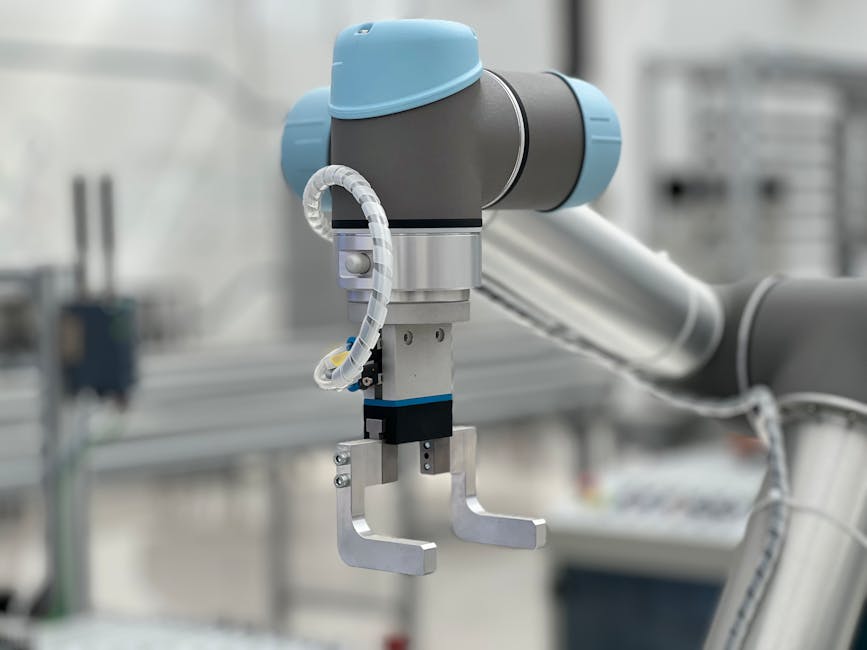
Understanding AI-Driven Production Excellence requires addressing questions that span technical feasibility, organizational readiness, and return on investment timelines. Whether you're evaluating your first predictive maintenance pilot or scaling AI-powered quality control across your entire production network, the following questions and answers provide the clarity needed to make informed decisions that align with your specific manufacturing environment and business objectives.
Foundational Questions About AI in Manufacturing
What exactly constitutes AI-Driven Production Excellence in discrete manufacturing?
AI-Driven Production Excellence refers to the systematic application of artificial intelligence technologies across core manufacturing functions to achieve measurable improvements in production outcomes. This encompasses predictive maintenance systems that reduce unplanned downtime, computer vision applications for automated quality inspection, AI-powered production scheduling that optimizes Overall Equipment Effectiveness, and machine learning models that enhance Supply chain optimization. Unlike generic business AI applications, manufacturing-focused AI must operate within the constraints of production environments: real-time processing requirements, integration with Manufacturing Execution Systems, and the ability to function reliably in industrial conditions. The excellence component emphasizes that AI implementations must deliver tangible business value—improvements in First-pass yield, reductions in production cycle time, or cost savings that exceed implementation investments within defined timeframes.
How much data do we need before starting an AI initiative?
The data volume question varies significantly based on the specific AI application. For supervised learning approaches in quality prediction, manufacturers typically need thousands of labeled examples representing both acceptable and defective products. However, transfer learning techniques can dramatically reduce these requirements—a computer vision system for defect detection might achieve production-ready accuracy with as few as several hundred manufacturer-specific images when fine-tuned from pre-trained models. Predictive maintenance applications require sufficient historical data to capture multiple failure cycles, often spanning twelve to eighteen months of sensor readings. Organizations should focus less on absolute data volumes and more on data quality: properly labeled examples, representative coverage of operating conditions, and sufficient variation to train robust models. Many successful AI pilots begin with focused applications where adequate historical data already exists in Manufacturing Resource Planning systems or quality management databases.
Can AI work with our existing ERP and MES systems?
Modern AI platforms are specifically designed to integrate with enterprise manufacturing systems through standard APIs and data exchange protocols. Leading ERP systems from SAP, Oracle, and Microsoft include pre-built connectors that enable AI applications to access production data, Bill of Materials information, and order fulfillment records without custom integration development. The integration challenge typically centers not on technical compatibility but on data architecture—ensuring that data flowing from MES platforms to AI systems maintains the structure, timeliness, and quality that machine learning models require. Organizations should prioritize AI development approaches that accommodate existing system architectures rather than requiring wholesale replacement of functioning enterprise software. Successful implementations often employ middleware layers that handle data transformation and normalization, allowing AI systems to consume data from multiple sources while existing operational systems continue running unchanged.
Implementation and Technical Questions
Should we build AI capabilities internally or partner with external providers?
This build-versus-buy decision depends on three primary factors: the strategic importance of AI to your competitive position, the availability of internal technical talent, and the specificity of your manufacturing requirements. Manufacturers for whom AI-enabled capabilities constitute core competitive advantages—such as highly customized quality control for proprietary products—often justify building internal teams that combine data science expertise with deep manufacturing domain knowledge. However, most discrete manufacturers achieve faster time-to-value by partnering with specialized providers for initial implementations, then gradually building internal capabilities as AI maturity increases. Hybrid approaches prove most common: external partners provide platforms and initial model development while internal teams handle ongoing model refinement and expansion to additional use cases. The critical success factor is ensuring that whichever approach you choose, manufacturing domain expertise actively guides AI development rather than allowing pure technologists to work in isolation from production realities.
How do we handle the change management aspects of AI implementation?
Change management represents the most frequently underestimated aspect of AI-Driven Production Excellence initiatives. Production operators, quality inspectors, and line supervisors often view AI systems as threats to their roles rather than tools that enhance their effectiveness. Successful implementations address this through transparent communication about how AI augments rather than replaces human judgment. At companies like Honeywell, AI rollouts include extensive training programs that help production teams understand what AI systems can and cannot do, building trust through demonstrated accuracy before fully automating decisions. Pilot programs should include feedback mechanisms where floor-level staff can report when AI recommendations seem incorrect, creating collaborative refinement processes. Organizations that involve production teams in defining success metrics and selecting pilot applications see significantly higher adoption rates than those where AI initiatives are perceived as top-down mandates disconnected from operational realities.
What implementation timeline should we expect?
Realistic AI implementation timelines vary by application complexity and organizational readiness. A focused predictive maintenance pilot targeting a single equipment type typically requires three to six months from project initiation to production deployment: four to eight weeks for data collection and preparation, six to ten weeks for model development and validation, and four to six weeks for integration testing and deployment. More complex applications involving computer vision for quality inspection may extend to nine to twelve months for initial deployment. Enterprise-wide scaling adds substantial time—manufacturers should expect eighteen to thirty-six months to progress from successful pilot to full production deployment across multiple facilities. These timelines assume adequate data availability and reasonable organizational readiness. Organizations lacking clean historical data or facing significant system integration challenges should add three to six months to these baseline estimates. The most successful implementations structure projects in phases with clear go/no-go decision points, allowing organizations to validate value delivery before committing to full-scale deployment.
ROI and Business Value Questions
What return on investment should we expect from AI implementations?
ROI expectations must align with specific application areas and current performance baselines. Predictive Maintenance AI implementations typically deliver returns through reduced unplanned downtime and extended equipment life, with leading manufacturers reporting fifteen to twenty-five percent reductions in maintenance costs within the first year. Quality control applications using computer vision show ROI through reduced inspection labor costs and improved defect detection rates—manufacturers often see payback periods of twelve to eighteen months. Manufacturing Process Optimization applications that enhance production scheduling and resource allocation demonstrate value through improved Overall Equipment Effectiveness, with typical improvements of eight to fifteen percentage points in OEE translating to substantial throughput gains. The most reliable predictor of strong ROI is selecting initial applications where current pain points are clearly quantified: if you cannot measure your current defect rate, schedule adherence, or equipment utilization, you cannot credibly measure AI's improvement impact.
How do we measure success beyond financial returns?
While financial metrics remain essential, comprehensive AI success measurement includes operational KPIs that reflect production excellence. First-pass yield improvements demonstrate enhanced quality control, with AI implementations often achieving five to twelve percentage point gains. Reductions in production cycle time indicate improved scheduling and resource optimization. Inventory turnover improvements reflect better demand forecasting and Just-In-Time inventory management enabled by AI. Leading manufacturers also track organizational metrics: the rate at which successful AI models expand to additional production lines, the time required to develop and deploy new AI applications as internal capabilities mature, and employee satisfaction scores among production teams working with AI-augmented processes. These operational and organizational metrics often serve as leading indicators that predict sustained financial returns, while purely financial metrics may lag implementation by several quarters.
Advanced Implementation Questions
How do we scale AI from successful pilots to enterprise-wide deployment?
Scaling represents the point where many AI initiatives stall despite successful pilots. The key challenge is rarely technical—it's organizational and operational. Successful scaling requires standardizing on common AI platforms and development approaches rather than allowing each facility to implement custom solutions. Manufacturers should establish AI centers of excellence that codify learnings from initial pilots into reusable frameworks, reducing the time and cost to deploy similar applications at additional sites. Data infrastructure must scale alongside AI applications: organizations need enterprise data lakes or warehouses that consolidate production data from multiple facilities in consistent formats. Change management processes proven during pilots must be systematically replicated, often requiring dedicated change management resources rather than expecting operational leaders to absorb these responsibilities alongside their production accountabilities. Companies like General Electric have found that creating dedicated AI deployment teams—separate from both the initial AI development teams and the operational teams at target facilities—accelerates scaling by providing focused expertise in the unique challenges of rolling out proven AI solutions in new environments.
How do we keep AI models accurate as production conditions change?
Model drift—the gradual degradation of AI accuracy as production conditions diverge from training data—represents a critical challenge that many organizations discover only after initial deployments. Addressing this requires implementing model monitoring systems that track prediction accuracy in real-time and alert teams when performance degrades below acceptable thresholds. Leading implementations include automated retraining pipelines that periodically update models with recent production data, ensuring that AI systems adapt to evolving conditions. The frequency of retraining varies by application: predictive maintenance models for equipment in stable operating conditions may require quarterly updates, while quality prediction models for production lines with frequent product mix changes may need monthly or even weekly retraining. Organizations should budget for ongoing model maintenance as a permanent operational cost, typically representing fifteen to twenty-five percent of initial development costs annually. MLOps practices—analogous to DevOps but focused on machine learning—provide frameworks for systematizing these model lifecycle management processes.
What role does generative AI play alongside traditional machine learning?
While much manufacturing AI focuses on predictive and optimization applications using traditional machine learning, generative AI introduces new capabilities particularly relevant to New Product Introduction cycles and complex problem-solving scenarios. Generative models can synthesize realistic training data for rare defect types, accelerating the development of quality control systems when historical defect examples are limited. In production planning, generative AI can explore vast solution spaces to identify optimal production schedules that balance competing constraints in ways that traditional optimization algorithms struggle to achieve. For Root cause analysis, generative AI systems can process unstructured data from maintenance logs, operator notes, and engineering documents to identify patterns that might explain recurring quality issues. However, generative AI applications require careful validation—manufacturers must ensure that AI-generated insights align with physical and engineering realities rather than representing statistically plausible but practically impossible recommendations.
Conclusion
The questions addressed in this FAQ represent the accumulated insights from manufacturers at various stages of their AI journey, from initial exploration through mature, enterprise-wide deployments. Success in AI-Driven Production Excellence requires not just technical capabilities but clear-eyed understanding of organizational readiness, realistic timeline expectations, and systematic approaches to scaling proven pilots. As discrete manufacturing continues its evolution toward increasingly intelligent production systems, the organizations that thoughtfully address these foundational and advanced questions position themselves to capture sustainable competitive advantages. The path forward requires balancing ambition with pragmatism—pursuing transformative improvements while maintaining the operational discipline that manufacturing excellence demands. For organizations ready to translate these insights into concrete action, exploring purpose-built Generative AI Solutions designed specifically for discrete manufacturing environments provides the practical foundation for turning AI potential into production reality.


Comments
Post a Comment