AI Cloud Infrastructure Evolution: 2026-2030 Trade Promotion Forecast
The consumer packaged goods industry stands at an inflection point where trade promotion management is being fundamentally reshaped by technological convergence. Category managers and trade marketing leaders at companies like Procter & Gamble and Unilever are increasingly recognizing that the next competitive advantage won't come from isolated software upgrades but from how intelligently their infrastructure can adapt, learn, and scale. As we look toward 2030, the trajectory of artificial intelligence capabilities merged with elastic cloud computing resources presents a roadmap that will redefine promotion effectiveness analytics, demand forecasting accuracy, and ultimately, how billions in trade spend get allocated across retail channels.
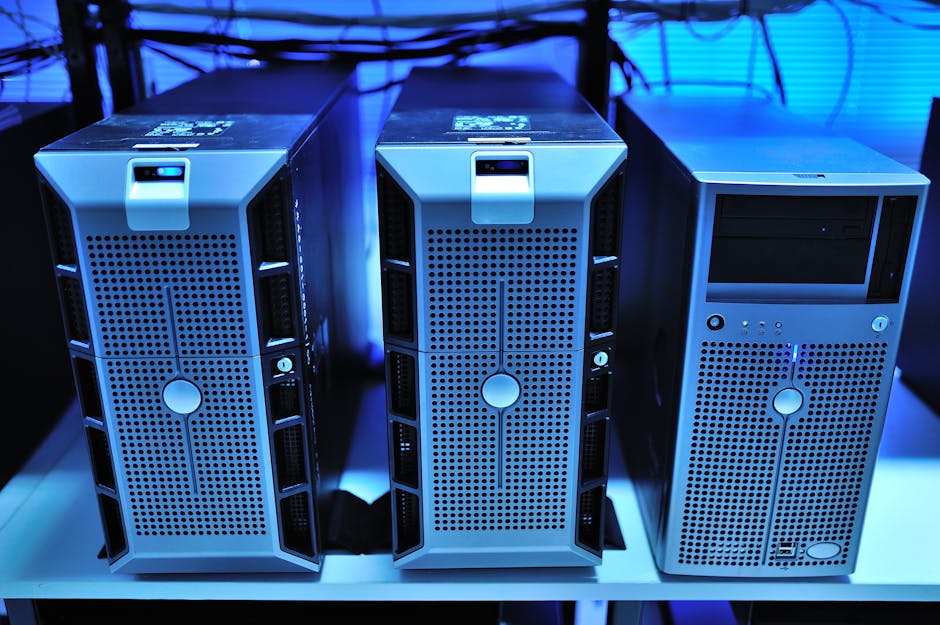
The foundation for this transformation rests on what industry technologists now call AI Cloud Infrastructure, a convergent architecture where machine learning models don't just run on cloud platforms but become native to them, drawing computational power elastically while processing promotion data from thousands of retail touchpoints simultaneously. For CPG organizations managing complex promotion calendars across national and local campaigns, this isn't an academic exercise but a practical necessity as promotional cadence accelerates and consumer behavior becomes increasingly fragmented across channels.
The 2026 Baseline: Where Trade Promotion Infrastructure Stands Today
Before projecting forward, it's essential to understand the current state. Most enterprise CPG organizations in 2026 operate trade promotion management systems that are partially cloud-enabled but still rely heavily on batch processing, manual data reconciliation, and rule-based decisioning. When a category manager at Nestlé or Coca-Cola evaluates a proposed trade deal with a major retailer, they typically consult historical lift data, apply volume forecasts from their demand planning system, and negotiate terms based on experience-informed intuition supplemented by static analytics.
The infrastructure supporting these decisions often involves on-premise ERP systems feeding cloud-based analytics platforms, with promotion effectiveness measured weeks after execution through post-promotion analysis. AI models, where they exist, tend to be narrow-purpose: a demand forecasting algorithm here, a price optimization model there, each operating in relative isolation. Trade spend optimization remains largely a planning exercise rather than a dynamic, continuously learning process.
This architecture creates predictable pain points: promotional ROI calculations lag reality by 30-45 days; cross-merchandising opportunities get identified after the promotion window closes; and market basket analysis reveals consumer purchase patterns too late to adjust shelf space negotiations or planogram compliance strategies. The infrastructure can't adapt at the speed modern retail demands.
2027-2028: Real-Time Promotion Intelligence Becomes Standard
The first major shift arriving in the 2027-2028 timeframe will be the normalization of real-time promotional analytics powered by AI Cloud Infrastructure that processes sell-through data continuously rather than periodically. Instead of waiting weeks for post-promotion reports, trade marketing teams will monitor incremental sales lift during the promotion itself, with machine learning models identifying underperforming regions or product combinations within 48-72 hours of launch.
Adaptive Promotion Execution
This capability emerges from cloud platforms that can ingest point-of-sale data streams from retailers, combine them with supply chain signals, weather data, competitive activity, and social media sentiment, then feed this multi-source data into neural networks trained specifically on promotional response patterns. The infrastructure scales compute resources automatically during major promotional periods—think back-to-school campaigns or holiday pushes—then scales down during quieter periods, making sophisticated AI economically viable even for mid-tier brands.
For category management teams, this translates into actionable intelligence: if a trade promotion for beverage products shows strong lift in suburban markets but weak response in urban locations, the AI system flags this discrepancy and suggests tactical adjustments—perhaps shifting promotional spend to different products or channels in underperforming areas. Organizations beginning to adopt custom AI development will gain early advantage in tailoring these capabilities to their specific category dynamics and retailer relationships.
Collaborative Forecasting Reimagined
By 2028, collaborative forecasting with retailers will shift from quarterly business review meetings with static presentations to continuous, AI-mediated dialogue. Cloud infrastructure will enable secure data sharing environments where CPG manufacturers and retailers jointly feed transaction data, inventory levels, and promotional calendars into shared predictive models. These models will generate consensus forecasts automatically, highlighting areas of divergence for human review rather than requiring analysts to manually reconcile competing spreadsheets.
The computational demands of running thousands of SKU-level forecasts across hundreds of retail locations, updated daily and incorporating both parties' proprietary data, simply cannot be met by traditional infrastructure. AI Cloud Infrastructure makes this feasible through distributed processing, federated learning techniques that protect competitive data, and automatic model retraining as new promotional outcomes become available.
2029: Autonomous Trade Deal Optimization
The period around 2029 will likely mark the arrival of semi-autonomous trade promotion systems that can negotiate deal parameters within predefined boundaries. This doesn't mean eliminating human category managers or trade marketers, but rather augmenting their capacity through AI agents that can evaluate thousands of potential promotion scenarios, simulate their outcomes using probabilistic modeling, and recommend optimal deal structures.
Imagine a trade deal negotiation between a major CPG manufacturer and a national retailer chain for a new product launch. Traditionally, this involves back-and-forth discussions about discount depth, promotional duration, feature ad placement, and incremental display allowances. By 2029, AI systems built on sophisticated cloud infrastructure will be able to model each combination of variables, estimate the resulting sell-in and sell-through rates, calculate true incremental volume after accounting for baseline cannibalization and competitive response, and identify the Pareto frontier of deals that maximize joint value.
Dynamic Trade Spend Allocation
More significantly, these systems will enable dynamic trade spend reallocation during execution. If a promoted product is underperforming in one retail banner but exceeding expectations in another, the AI infrastructure can automatically propose shifting promotional funds—subject to human approval—to channels showing higher ROI. This requires not just analytical capability but also integration with financial systems, promotional contract management platforms, and retailer collaboration portals, all orchestrated through cloud-native microservices that can communicate across organizational boundaries.
Trade Spend Optimization evolves from an annual planning ritual into a continuous improvement process. Machine learning models track every promotional dollar's marginal return, building increasingly refined understanding of which promotional mechanics drive genuine incremental lift versus merely shifting purchase timing or stealing share from the manufacturer's other products. This granular visibility into promotional effectiveness, processed and updated daily across the entire product portfolio, represents a computational scale that only cloud infrastructure can economically support.
2030 and Beyond: Predictive Market Shaping
Looking toward 2030, the most sophisticated CPG organizations will deploy AI Cloud Infrastructure not merely to respond to market conditions but to shape them proactively. This involves predictive systems that identify emerging consumer trends from weak signals—shifts in online search behavior, social media conversations, competitive product launches, economic indicators—and automatically surface recommendations for promotional strategies that capitalize on these trends before they fully materialize.
For example, if natural language processing models analyzing consumer review data detect growing interest in sustainable packaging within a specific demographic segment, and this insight correlates with geographic regions where the manufacturer has trade relationships with environmentally-focused retailers, the system might recommend proactive promotional campaigns for products with eco-friendly credentials, targeting those specific regions and retail partners. The promotion gets designed, approved, and launched while the trend is still ascending, capturing maximum lift.
Hyper-Personalized Promotional Strategies
The concept of national promotions versus local promotions will fragment further into micro-market and even store-level promotional strategies, each optimized by AI analyzing local consumer preferences, competitive intensity, and inventory positions. This level of granularity—managing potentially thousands of simultaneous promotional variations—is impossible without cloud infrastructure that can process vast datasets and run optimization algorithms continuously.
Promotion Effectiveness Analytics will incorporate advanced causal inference techniques that can disentangle the impact of the promotion itself from confounding factors like seasonality, weather, competitive activity, or earned media. These techniques are computationally expensive, requiring Bayesian inference methods and synthetic control experiments that must run across large datasets. Cloud infrastructure provides the computational horsepower and data storage capacity to make these sophisticated analytics routine rather than exceptional.
Infrastructure Implications for CPG Organizations
These future capabilities impose specific infrastructure requirements that category management and trade marketing leaders should understand, even if implementation falls to IT and data science teams. First, data architecture must evolve toward real-time streaming rather than batch processing. Point-of-sale data, shipment data, inventory positions, and promotional activity must flow continuously into centralized data lakes or lakehouses accessible to AI models.
Second, integration becomes paramount. AI Cloud Infrastructure must connect seamlessly with existing ERP systems, demand planning tools, customer relationship management platforms, and retailer portals. This requires API-first design, standardized data formats, and middleware that can translate between legacy systems and modern cloud services. Companies that fail to address integration will find their AI initiatives stuck in pilot purgatory, generating insights that never reach decision-makers or influence actual trade promotion execution.
Third, governance and security frameworks must accommodate collaborative AI, where models trained on joint CPG-retailer data support mutual objectives while protecting each party's competitive information. This necessitates techniques like differential privacy, secure multi-party computation, and federated learning, all of which add architectural complexity but enable levels of collaboration impossible with traditional data sharing.
Skills and Organizational Readiness
Beyond technology, these trends demand new skills within trade marketing and category management functions. Future category managers will need sufficient data literacy to interpret AI-generated recommendations critically, understanding not just what the model recommends but why, and under what assumptions. They'll need to work effectively with data scientists and cloud engineers, translating business objectives into technical requirements and vice versa.
Organizations should invest now in building these capabilities, whether through training existing staff, recruiting hybrid-skilled professionals, or establishing cross-functional teams that pair business domain experts with technical specialists. The competitive advantage from AI Cloud Infrastructure ultimately comes not from the technology itself but from how effectively humans and machines collaborate to make better trade promotion decisions.
Challenges and Considerations
This future isn't guaranteed or uniformly distributed. Several challenges may slow adoption or create divergent paths. Data quality remains foundational—sophisticated AI models trained on incomplete, inconsistent, or biased historical promotion data will produce flawed recommendations. Many CPG organizations still struggle with basic data hygiene, SKU master data management, and consistent coding of promotional mechanics across systems.
Economic factors matter too. Cloud computing and AI services involve ongoing operational expenses that can escalate unexpectedly as data volumes and model complexity grow. Organizations must carefully architect their infrastructure to balance capability against cost, leveraging techniques like data tiering, model pruning, and intelligent caching to optimize cloud spending.
Regulatory considerations around data privacy, algorithmic transparency, and competitive behavior may constrain certain applications. If AI systems dynamically adjust pricing or promotional terms in ways that regulators deem anti-competitive or discriminatory, the legal and reputational risks could outweigh the analytical benefits. Forward-thinking organizations will engage proactively with legal and compliance teams to establish guardrails for AI-driven trade promotion decisions.
Conclusion
The trajectory from 2026 through 2030 points toward a trade promotion management paradigm where decisions are faster, more data-informed, and increasingly collaborative between manufacturers and retailers. AI Cloud Infrastructure serves as the enabling foundation, providing the computational scale, data integration capabilities, and algorithmic sophistication needed to manage promotion complexity that exceeds human cognitive capacity. For CPG organizations committed to maintaining category leadership and maximizing trade spend ROI, the question isn't whether to adopt these capabilities but how quickly and strategically to build them. The organizations that successfully navigate this transition—combining strong category management fundamentals with advanced AI Trade Promotion Solutions—will set the standard for promotional effectiveness that competitors will struggle to match for years to come.


Comments
Post a Comment