How a Global Logistics Company Achieved 67% Efficiency Gains Through Intelligent Automation
When GlobalFreight Solutions, a multinational logistics provider managing over 2.5 million shipments annually across 47 countries, faced mounting pressure from rising operational costs and increasing customer expectations, leadership recognized that incremental improvements would no longer suffice. The company needed transformative change. What followed was an ambitious three-year journey that would fundamentally reshape operations, demonstrating both the tremendous potential and the significant challenges of large-scale automation initiatives. This detailed examination of their experience offers concrete lessons for organizations contemplating similar transformations.
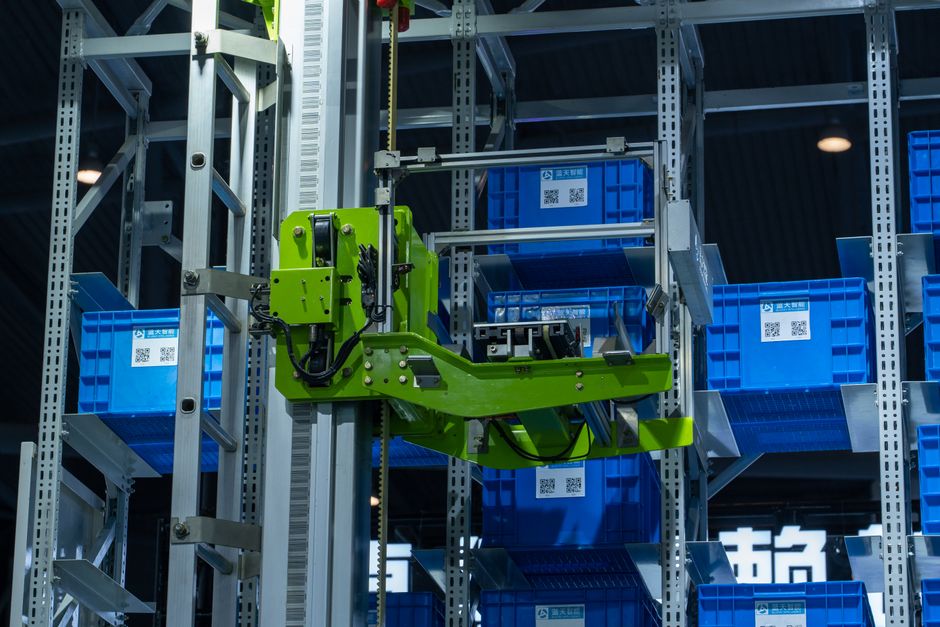
GlobalFreight's journey into Intelligent Automation began not with technology selection, but with a sobering assessment of operational realities. The company was hemorrhaging value through manual processes that had accumulated over decades of organic growth and acquisition. Order processing required an average of 4.7 hours from initial customer contact to shipment booking, with information passing through seven different systems and requiring manual data entry at each step. Customer service representatives spent 62% of their time on routine status inquiries rather than complex problem-solving. The finance team needed eleven business days to close monthly books, working overtime during each close period to reconcile data across disparate systems.
The Strategic Foundation: Assessment and Planning
Rather than rushing to implement automation, GlobalFreight invested six months in comprehensive discovery and strategic planning. The company formed a cross-functional steering committee including operations, IT, finance, customer service, and human resources. This team conducted a detailed process mapping exercise, documenting 127 distinct business processes across the organization. Each process was evaluated on four dimensions: transaction volume, error rate, cycle time, and strategic importance.
This analysis revealed surprising insights. Some processes leadership assumed were automation priorities actually involved too much human judgment and too little transaction volume to justify automation investment. Conversely, several back-office processes that had received little attention were processing enormous transaction volumes with high error rates, creating hidden costs throughout the organization. The assessment identified 23 processes that met criteria for automation priority: high transaction volume, rules-based decision logic, significant manual effort, and measurable business impact.
Defining Success Metrics
GlobalFreight established clear, measurable objectives before beginning implementation. Primary metrics included reducing order processing time from 4.7 hours to under 30 minutes, decreasing customer service inquiry resolution time by 60%, cutting monthly financial close from eleven days to three days, reducing process error rates by at least 80%, and improving employee satisfaction scores by reducing time spent on repetitive tasks. Critically, the company also defined acceptable transition costs and timelines, recognizing that transformation would require significant investment before delivering returns.
Phase One: Robotic Process Automation Foundation
Implementation began with robotic process automation targeting the highest-volume, most rules-based processes. The first wave focused on order entry and processing. Previously, when customers submitted shipping requests via email, web forms, or phone calls, customer service representatives manually entered information into the order management system, validated addresses, checked capacity availability, calculated pricing, and generated booking confirmations. This process was ripe for automation but fraught with complexity due to variations in how information was received and data quality issues in incoming requests.
GlobalFreight deployed software robots that could extract information from emails and web forms, validate and cleanse address data using external databases, query capacity management systems to check availability, apply complex pricing rules based on weight, distance, service level, and customer contracts, generate booking confirmations, and update multiple downstream systems. The implementation took four months longer than initially planned, primarily due to unanticipated data quality issues and the need to handle numerous exception scenarios that had not been documented in process maps.
Early Results and Adjustments
Despite implementation challenges, Phase One delivered measurable results. Order processing time dropped from 4.7 hours to 1.2 hours, representing a 74% reduction. Error rates in booking data decreased by 68%. Customer service representatives reported spending 40% less time on order entry tasks. However, the initiative also revealed problems. The robots occasionally failed when encountering data formats they had not been trained to handle, requiring human intervention. System performance degraded during peak periods as robots competed with human users for system resources. Some employees resisted the changes, worried about job security and frustrated by new procedures required to support the automated workflows.
Phase Two: Introducing Machine Learning and Advanced Analytics
Building on the robotic process automation foundation, GlobalFreight's second phase introduced machine learning capabilities to handle more complex scenarios. The company partnered with technology providers specializing in intelligent automation platforms to develop predictive models and natural language processing capabilities that could augment the rules-based automation already in place.
One critical application involved customer service. Previously, when customers contacted the company with shipment inquiries, representatives manually searched through multiple systems to locate shipment information, determine current status, identify any issues or delays, and provide updates to customers. High inquiry volumes meant customers often waited 15-20 minutes on hold, and representatives struggled to access information quickly enough to provide efficient service.
The machine learning solution implemented a multi-layered approach. Natural language processing analyzed incoming customer emails and chat messages to identify intent, extract shipment identifiers, and determine inquiry type. Predictive analytics anticipated common questions and proactively surfaced relevant information to representatives before they needed to search for it. An AI-powered virtual assistant handled routine status inquiries without human intervention, while complex issues were routed to human representatives with contextual information already assembled. The system learned from each interaction, continuously improving its ability to understand customer inquiries and provide relevant information.
Transformation of Customer Service Operations
The impact on customer service operations proved dramatic. Average inquiry resolution time dropped from 8.3 minutes to 2.1 minutes, a 75% reduction. The virtual assistant successfully resolved 43% of all inquiries without human intervention, allowing representatives to focus on complex problem-solving and relationship building. Customer satisfaction scores increased by 28 percentage points. Perhaps most significantly, employee satisfaction improved as representatives spent less time searching systems and more time applying their expertise to genuinely challenging situations.
Phase Three: End-to-End Process Transformation
The final phase integrated and extended automation across entire process chains rather than isolated tasks. GlobalFreight focused on the quote-to-cash process, which spanned customer inquiry, pricing, booking, execution, invoicing, and payment collection. Previously, this process involved handoffs between seven different teams, with information moving through disconnected systems and requiring manual reconciliation at multiple points.
The company implemented an integrated automation strategy that orchestrated multiple technologies. Workflow automation managed the entire process flow, triggering appropriate actions at each stage. Robotic process automation handled data movement between systems. Machine learning optimized pricing decisions based on historical data, capacity forecasts, and competitive intelligence. Predictive analytics identified shipments at risk of delays and triggered proactive interventions. Automated invoicing systems generated bills immediately upon shipment delivery and matched payments to invoices without manual reconciliation.
This end-to-end approach delivered results that exceeded the sum of individual improvements. Complete quote-to-cash cycle time decreased from an average of 47 days to 12 days. Days sales outstanding improved by 31 days, significantly improving cash flow. Invoice accuracy reached 99.2%, reducing disputes and write-offs. The finance team cut monthly close time from eleven days to just over three days, and the team that previously worked overtime during every close now maintained normal schedules.
Lessons Learned: Critical Success Factors
Reflecting on their three-year journey, GlobalFreight leadership identified several factors that proved critical to success. Comprehensive upfront planning and process understanding prevented wasted effort on low-value automation. Executive sponsorship and sustained commitment ensured the initiative weathered inevitable challenges and setbacks. Cross-functional collaboration broke down silos and enabled end-to-end thinking. Significant investment in change management helped employees adapt to new ways of working and reduced resistance. Phased implementation allowed the organization to learn and adjust rather than betting everything on a single big-bang deployment. Continuous monitoring and optimization ensured systems improved over time rather than degrading.
Mistakes and Course Corrections
The journey was not without missteps. GlobalFreight initially underestimated data quality challenges, requiring a six-month pause to implement data governance and cleansing processes. The company's first vendor selection proved inadequate for enterprise-scale needs, necessitating a costly platform migration eighteen months into the initiative. Early communication about the automation initiative was insufficient, creating employee anxiety that manifested as resistance and required intensive change management intervention. Initial success metrics focused too heavily on cost reduction rather than value creation, creating perverse incentives that were later adjusted.
Quantified Business Impact
Three years after initiating their automation strategy, GlobalFreight documented comprehensive business impact. Operational efficiency improved 67% across automated processes, exceeding the original 50% target. Customer satisfaction scores increased 32 percentage points. Employee satisfaction improved 24 percentage points as workers moved from repetitive tasks to higher-value activities. Operating costs decreased by $47 million annually. Revenue increased 18% as improved service quality and faster quote-to-cash cycles enabled growth. Return on investment reached 340% over the three-year period.
Beyond quantified metrics, automation enabled qualitative improvements that proved equally valuable. The company could now respond to market changes more quickly, adjusting capacity and pricing in real-time rather than working from outdated information. Data-driven insights replaced gut-feel decision making in many areas. Standardized processes across acquired companies that had previously operated independently. Enhanced compliance and auditability through comprehensive process documentation and monitoring.
Conclusion
GlobalFreight's experience demonstrates that intelligent automation can deliver transformative results, but success requires far more than technology deployment. The company's 67% efficiency gain and substantial business impact came from strategic planning, organizational commitment, comprehensive change management, continuous learning and adaptation, and unwavering focus on business value rather than technology for its own sake. As organizations across industries pursue Enterprise AI Integration, GlobalFreight's journey offers both inspiration and practical guidance. The lessons learned—invest time in planning, address data quality early, manage change proactively, think in terms of processes not tasks, and measure what matters—provide a roadmap for others embarking on similar transformations. Automation technology continues to evolve rapidly, but the fundamentals of successful implementation remain remarkably consistent: clear strategy, organizational readiness, and disciplined execution.


Comments
Post a Comment